
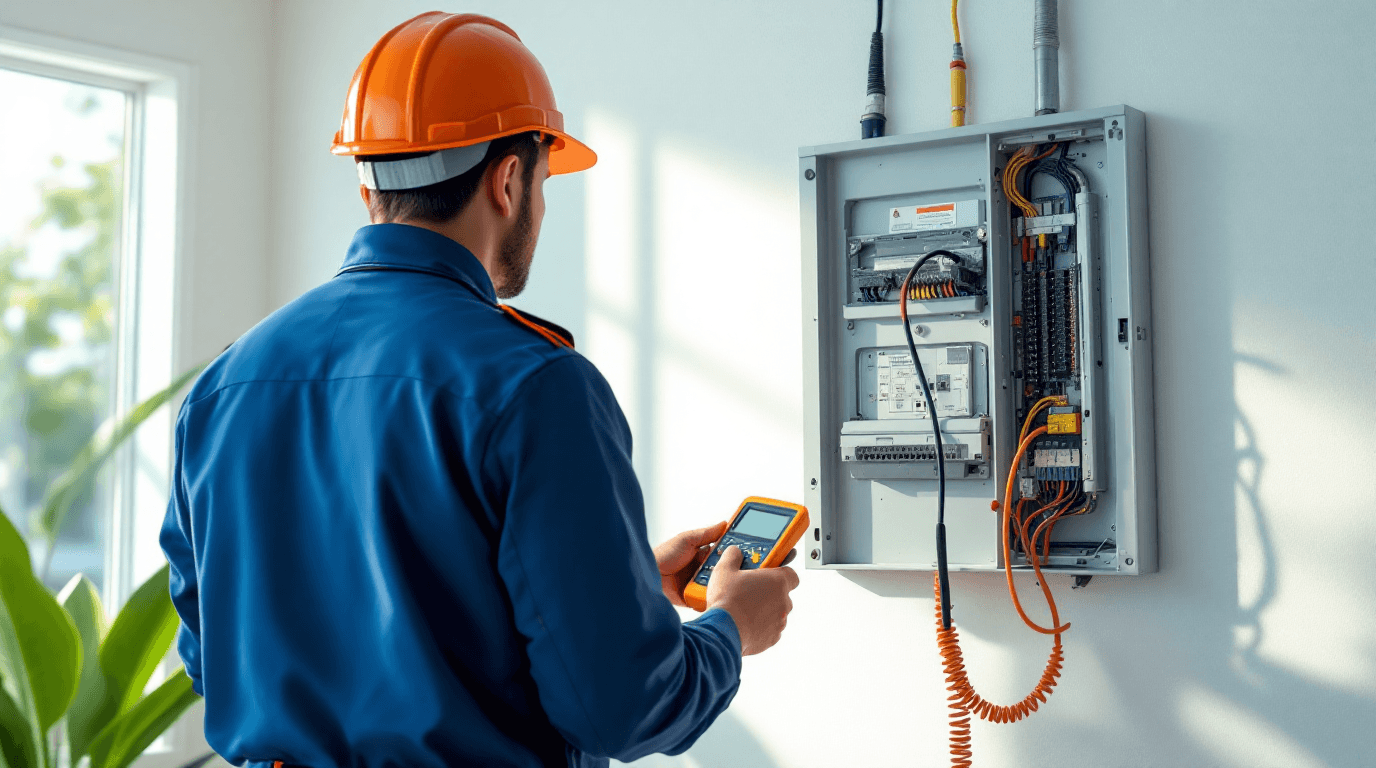
Your Electrical Panel is the Heart of Your Home
Your electrical panel distributes power from the utility to every room in your house. A faulty panel is a fire hazard and can damage expensive electronics. Here's what to check.
Visual Inspection Checklist
1. Check the Panel Door
- Is it cool to the touch? (Warm/hot indicates overload or arcing)
- Are there scorch marks or discoloration? (Sign of electrical arcing)
- Is the door damaged or dented?
2. Look Inside (without touching anything)
- Are wires organized or chaotic?
- Are breakers properly labeled?
- Are there any loose connections or burnt-out sections?
- Is there corrosion or water damage?
3. Test Your Breakers
- Does each breaker flip smoothly on and off?
- Do any breakers trip repeatedly? (Sign of circuit overload)
- Are all breakers labeled correctly?
Red Flags: When to Call a Licensed Electrician
URGENT (within 24 hours):
- Warm or hot panel door
- Scorch marks or visible burning
- Buzzing or arcing sounds
- Burning smell near the panel
- Water inside the panel box
SOON (within 1-2 weeks):
- Frequently tripping breakers
- Breakers that won't reset
- Missing knockout holes in the panel
- Exposed or damaged wiring
- Panel not labeled
Common Electrical Panel Problems
Problem #1: Outdated 60-Amp Service
- Risk: Insufficient power for modern appliances (AC, electric water heater, EV charger)
- Sign: Breakers trip when multiple appliances run
- Fix: Upgrade to 100-200 amp service
Problem #2: Double-Tapped Breakers
- Definition: Two wires connected to one breaker (illegal in most cases)
- Risk: Overload and fire
- Fix: Licensed electrician must separate into two breakers
Problem #3: Tandem Breakers (Quad-Plex)
- Definition: Two slim breakers in one slot
- Risk: Unsafe if not properly rated
- Fix: Replace with proper dual-pole breaker
Problem #4: Knob-and-Tube Wiring
- Risk: Extremely outdated; fire hazard in Florida heat
- Sign: Cloth-wrapped wires, old ceramic knobs
- Fix: Complete rewiring required
Problem #5: Federal Pacific Electric (FPE) Panels
- Model years: 1950-1980s
- Risk: Defective breakers don't trip when they should; fire hazard
- Fix: Full panel replacement
Problem #6: Zinsco Panels
- Model years: 1960s-1980s
- Risk: Breakers don't trip; connections corrode
- Fix: Full panel replacement
Florida-Specific Concerns
Humidity and Corrosion:
- Salt air near coasts accelerates corrosion
- Inspect panels annually in coastal homes
- Install a humidity monitor inside the panel box
Hurricane Preparation:
- Ensure your panel is outside the wind envelope if you're installing storm-rated doors/shutters
- Know where your main electrical shut-off is (in case of water damage)
Pool/Spa Wiring:
- Pools require GFCI protection on all circuits
- Spa equipment needs separate heavy-gauge service
- Never DIY pool wiring; always use a licensed electrician
DIY Safety Inspection vs. Professional Inspection
You can:
- Look at the panel door for visible damage
- Check that breakers flip smoothly
- Note if breakers trip repeatedly
Only a licensed electrician should:
- Remove the panel cover
- Test for proper grounding
- Inspect internal wiring
- Perform voltage testing
- Approve panel upgrades or repairs
Panel Upgrade: What to Expect
If you need a panel upgrade (100 to 200 amp):
Requires:
- Licensed electrician
- Permit from your city/county
- Inspection by the building official
Benefits:
- Support for modern appliances (electric car chargers, induction cooktops)
- Improved safety and code compliance
- Better resale value
- No more tripping breakers
Preventive Maintenance Schedule
Quarterly:
- Visual inspection for scorch marks or unusual odors
Annually:
- Test all breakers flip smoothly
- Check for warm areas around the panel
Every 5 Years:
- Professional inspection by a licensed electrician
- Thermal imaging to detect hot spots
Upon Renovation:
- Any electrical work requires a licensed electrician and permit
How HALOFIX Can Help
HALOFIX connects you with credential-reviewed electricians who:
- Perform honest inspections (we don't upsell unnecessary work)
- Handle urgent requests for active hazards where coverage is available
- Handle all permits and inspections
- Provide warranty records for eligible completed work
Don't ignore electrical panel problems. They're not DIY-able and not worth the risk.
Your electrical panel is literally the foundation of your home's power system. Invest in a professional inspection every few years - it's cheap insurance.