
Florida Electrical Safety Guide 2026: Panel Upgrades, Code Requirements & Lightning Protection
Florida has earned its title as the "Lightning Capital of the United States." Tampa, Florida receives more lightning strikes per square mile than any other location in the continental U.S.-over 1.2 million lightning strikes hit the state annually, with the highest concentration in Central Florida (Tampa Bay) and South Florida (Miami-Dade County). This electrical violence, combined with aging infrastructure in many communities, makes understanding electrical safety critically important for every Florida homeowner.
Residential fires caused by electrical systems and lighting account for 8% of all structure fires in the United States, but in Florida's humid climate with aggressive storm activity, that percentage is higher. Aging electrical panels, insufficient surge protection, and outdated wiring create constant risk.
Understanding Your Electrical Panel
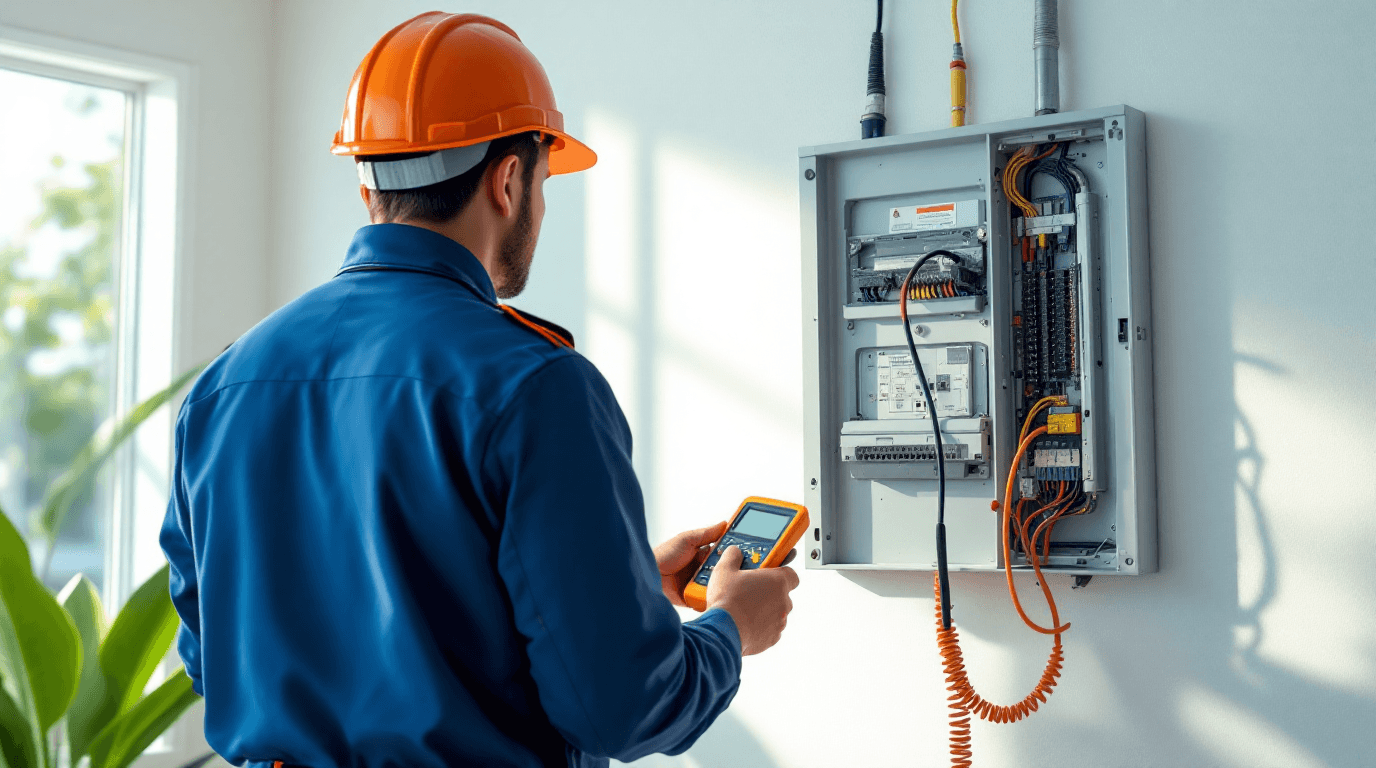
Your home's electrical panel (also called breaker box or service panel) is the central nervous system of your home's electrical system. It receives power from the utility company (typically 200 amps for modern homes, 100-150 amps for older homes) and distributes it through individual circuits protected by breakers.
Panel Size & Capacity: Modern homes require 200-amp service. Homes built before 1985 often have 100-amp service, which is inadequate by today's standards with electric vehicles, heat pumps, central AC, and multiple appliances running simultaneously. A typical 100-amp panel can safely handle approximately 24,000 watts of simultaneous draw. A modern 200-amp panel handles 48,000 watts.
Upgrade Triggers:
- Frequent breaker trips (indicates overload)
- Home inspection recommends upgrade (when selling)
- Adding central AC, heat pump, or EV charger (requires expansion of capacity)
- Any major electrical work (adds new circuits, requires available breaker slots)
- Home age 40+ years with original 100-amp service (electrical loads have grown, safety margins eroded)
Panel Upgrade Costs: 100-amp to 200-amp upgrade runs $1,500-$3,000 in labor and materials. The work requires a licensed electrician, utility company involvement (they perform the actual service drop connection), and permit/inspection ($200-$400). Total timeline: 3-5 business days.
Federal Pacific & Zinsco Panels: Known Hazards
Approximately 2 million homes in the U.S., including many in Florida, have Federal Pacific Electric (FPE) or Zinsco brand breaker panels installed. These brands, prevalent in homes built 1950-1980, are known to have catastrophically high failure rates.
Federal Pacific Panels fail to trip breakers appropriately, allowing dangerous overcurrent situations to continue instead of cutting power. CPSC (Consumer Product Safety Commission) investigations revealed that 25% of tested FPE breakers failed to protect circuits. These panels frequently catch fire inside walls before residents realize there's an issue.
Zinsco Panels suffer similar defects. Breakers corrode internally, becoming stuck in the "on" position and unable to trip during overload or short circuits.
Action Required: If your home has FPE or Zinsco panel:
- Contact a licensed electrician for immediate inspection
- If panel is original and 40+ years old, plan replacement ($1,500-$3,500)
- Do NOT attempt repairs yourself-only credential-reviewed electricians should work on these panels
- Inform your homeowners insurance agent (some policies exclude claims related to FPE/Zinsco panels)
Florida Building Code requires any electrical system work to include evaluation of panel safety. Most permits issued during kitchen/bathroom remodels or electrical upgrades trigger panel inspection, revealing these hazards.
NEC 2023 Code Requirements for Florida
The National Electrical Code (NEC) 2023 edition was adopted with Florida modifications and is the current standard in Florida. Key provisions relevant to homeowners:
GFCI Protection (Ground Fault Circuit Interrupter): GFCI breakers and outlets monitor for ground faults (electricity taking an unintended path through water or a person) and cut power within milliseconds. GFCI is required in:
- Kitchen countertop outlets (within 6 feet of sink)
- All bathroom outlets
- Garage outlets
- Outdoor outlets
- Basement outlets and unfinished basement walls
- Any outlet within 6 feet of water source (wet bar, pool, hot tub)
Cost: GFCI breaker ($50-$100) or GFCI outlet ($30-$60) plus installation labor ($100-$250).
AFCI Protection (Arc Fault Circuit Interrupter): AFCI breakers detect dangerous arcing (intermittent sparking in damaged wires) and cut power before fire can start. Originally required only in bedrooms, AFCI is now required in most living spaces:
- All bedroom circuits (required since 2008)
- Family rooms, living rooms, dens (required 2020+)
- Kitchen (required 2023+)
- Most other interior spaces except bathrooms, hallways, storage areas
Cost: AFCI breaker ($75-$150) plus installation ($100-$250 per breaker).
Homes built before 2008 with original wiring typically lack AFCI protection. Retrofitting a home built in 1995 to full AFCI compliance costs $2,000-$5,000 depending on circuit count.
Lightning Protection & Whole-Home Surge Protection
Florida's lightning frequency demands serious surge protection strategy. Direct strikes hit homes less frequently (1 in 500,000 annually), but lightning-induced surges travel through power lines, internet lines, and phone lines constantly-particularly during storms.
Whole-Home Surge Protectors: These devices ($300-$600 installed) connect to your electrical panel and shunt dangerous surges away from your home's wiring and appliances. They protect against:
- Power line surges from lightning strikes miles away
- Utility switching events
- Transformer explosions or line failures
Whole-home protection doesn't prevent direct strikes (nearly impossible to protect against), but it stops the vast majority of surge damage.
Point-of-Use Protection: Surge-protected power strips ($20-$60) protect individual devices. Quality matters-cheap strips offer minimal protection. Choose outlets/strips rated 600-1,000 joules or higher. Clamp voltage protection of 400V or less is adequate.
For Vulnerable Equipment:
- Computer systems: Uninterruptible Power Supply (UPS) with surge protection ($150-$500) protects against surges AND provides backup power
- Water heaters: Surge-protected inlet or whole-home protection (water heaters are vulnerable to surge damage)
- HVAC systems: Whole-home protection is essential; AC failures from surge damage cost $4,000-$8,000 to replace
- Smart home systems: UPS and surge protection recommended
EV Charger Installation
Electric vehicle ownership in Florida has grown 400% since 2020. Installing a home EV charger requires electrical considerations.
Charger Types:
- Level 1 (standard 120V outlet): Included with most EVs, adds 2-5 miles range per hour. No installation cost beyond existing outlet, but impractical for daily charging (5-10 hours to charge typical battery).
- Level 2 (240V dedicated circuit): Adds 10-30 miles range per hour. Industry standard for home installation.
- DC Fast Charge (480V three-phase): Not available for residential installation (requires industrial electrical service).
Level 2 Installation:
- Charger hardware: $300-$900 (Tesla Wall Connector, Chargepoint, Emporia, etc.)
- Electrical installation: $400-$1,500 (distance from panel, circuit availability, conduit/cabling)
- Upgrade to 200-amp service (if needed): $1,500-$3,000
- Permit and inspection: $100-$300
- Total Range: $500-$2,000
Location matters. Installing charger in garage or carport (adjacent to home) costs less than charger in driveway requiring underground conduit ($150-$300 additional).
Florida utilities offer EV charger rebates ($500-$1,500) if charger is "smart-capable" (communicates with utility for load-balancing during peak demand times).
Aluminum Wiring in Florida Homes (1965-1980)
Many Florida homes built during this period used aluminum wiring instead of copper. Aluminum oxidizes faster than copper, creating increased resistance at connection points. This causes heat buildup, risking wire insulation damage and fire.
Aluminum Wiring Issues:
- Oxidation at outlet/switch connections causes arcing and heat
- Current-carrying capacity is lower than equivalent copper (14-gauge aluminum = 10-gauge copper strength)
- Difficulty finding electricians willing to work with aluminum (oxidation difficult to manage)
Risk Assessment: All aluminum wiring homes should have a professional evaluation ($200-$400). Signs of trouble include:
- Switches or outlets that feel warm during operation
- Outlets/switches showing corrosion or discoloration
- History of breaker tripping on specific circuits
Remediation Options:
- Pigtail copper to aluminum: Splice copper wire directly to aluminum outlets/switches ($200-$500 per outlet). This is CODE-APPROVED and reduces fire risk substantially.
- Full rewire: Replace all aluminum with copper ($5,000-$15,000+ depending on home size). Only necessary if aluminum wiring is severe or extensive pigtailing was already performed.
Many Florida homes have mixed solutions-original aluminum wiring with pigtailed copper at problematic outlets.
Does Your Home Need a Full Rewire?
Most Florida homes don't need complete rewiring, but several conditions warrant serious evaluation:
- Home age 60+ years with original knob-and-tube wiring (pre-1940, very rare in Florida): Insulation has deteriorated, fire risk is high. Rewire is essential. Knob-and-tube detection is difficult; have professional evaluate.
- Aluminum wiring with multiple outlets showing heat/corrosion signs: Extensive pigtailing or rewiring is necessary.
- Home built 1965-1980 with aluminum wiring AND insufficient capacity (100-amp service requiring expansion): Consider rewiring to copper simultaneously with service upgrade. Slightly higher cost during same project.
- Extensive damage from water intrusion: Wet wiring becomes conductive. If wall cavities had prolonged water exposure, wiring insulation should be replaced.
- Unpermitted or amateur electrical work: If previous owners performed DIY electrical work or hired unlicensed contractors, professional evaluation is essential before adding any new circuits or major appliances.
Electrical System Upgrades for Modernization
Adding Circuits/Subpanel: If your 100-amp or 150-amp panel is at capacity and you can't or won't upgrade to 200-amp service, a subpanel ($1,200-$2,000 installed) can expand capacity for specific areas (garage, additions, workshop).
Converting Knob-and-Tube to Modern: If any knob-and-tube wiring remains (increasingly rare), professional assessment is essential. Replacement within affected areas costs $1,500-$3,000.
Updating Ungrounded Outlets: Older homes with two-prong (ungrounded) outlets should have 240V circuits (dryer, range, AC) converted to three-prong for safety. Adding ground wire cost depends on wire routing ($300-$1,500 per outlet).
Working With Licensed Electricians
Florida requires all electrical work to be performed by licensed contractors. The Florida Department of Business and Professional Regulation (DBPR) maintains a searchable database of credential-reviewed electricians.
Licensing Requirements:
- Electrician: 8,000 hours apprenticeship + exam
- Master Electrician: 3 years as licensed electrician + exam
When hiring, always:
- Verify license through DBPR website (current license status, disciplinary history)
- Request proof of liability insurance
- Demand written estimate with itemized labor and materials
- Ensure contractor pulls permit (unlicensed work violates code)
- Request warranty terms in writing, including duration, exclusions, and who honors the labor warranty
Cheap quotes sometimes indicate use of unlicensed sub-contractors, compromising safety and code compliance.
Hurricane Preparation for Electrical Systems
Before hurricane season (June-November):
- Test whole-home generator if you have one ($200-$400 service fee)
- Ensure backup power plan: Generator, UPS systems for critical equipment (HVAC, well pump if applicable, refrigerator)
- Check GFCI breakers/outlets: Test monthly during season
- Secure outdoor electrical equipment: Disconnect air conditioning disconnect switch if flooding is possible; secure with weatherproof cover
- Ensure meter and panel are protected: Trim trees away from electrical lines (18+ feet clearance)
Generator Connection: NEVER use extension cords or backfed power into home electrical system. Improper generator connection electrocutes utility workers and damages home equipment. Proper installation requires manual transfer switch ($2,000-$4,000 installed) and permits.
The HALOFIX Advantage: Electrical work demands expertise and precision-this isn't a DIY arena. HALOFIX connects you with credential-reviewed electrical Heroes for Florida's code requirements, lightning risks, and aging infrastructure challenges. Applicable credentials and insurance evidence are reviewed where required. Whether you need panel upgrade, surge protection, EV charging installation, or urgent repair, HALOFIX helps route your request to a Hero who prioritizes safety and code compliance. Restoring your peace of mind means working with electrical Heroes you can trust. That's HALOFIX.