
Whole-Home Surge Protection: Why a Power Strip May Not Be Enough
Florida has frequent thunderstorms and lightning, so power surges are a real concern for Florida homes.
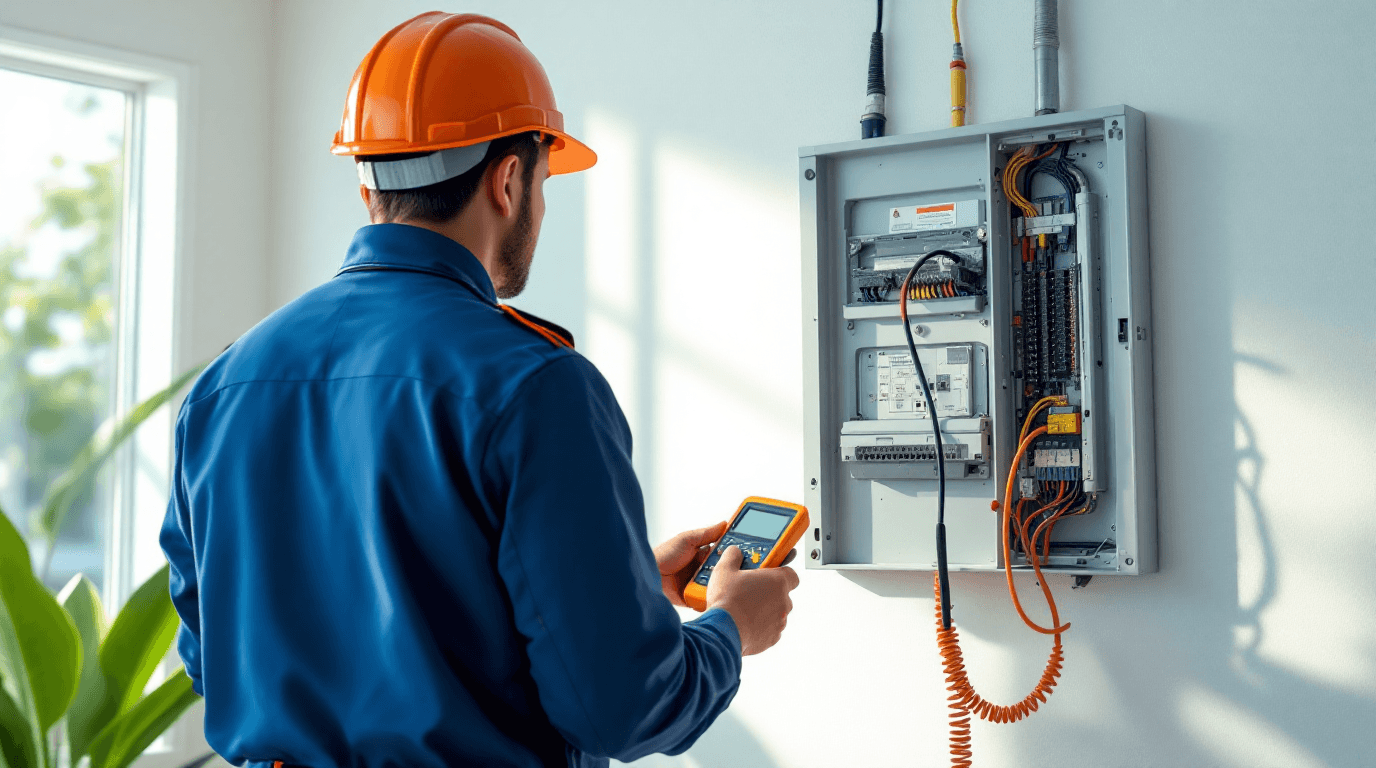
A power strip surge protector may protect your TV. Whole-home surge protection is installed at your electrical panel and is designed to help protect equipment throughout the house, such as your water heater, AC condenser, pool pump, and garage door opener.
How Power Surges Damage Electronics
A power surge is a sudden spike in electrical voltage. A surge can damage circuit boards and other components instantly, without warning.
Common surge sources:
- Lightning striking power lines
- Power company switching or grid changes
- Large appliances cycling on/off (drawing sudden current)
- Downed power lines
- Transformer failures
Why Power Strips May Not Be Enough
A plug-in power strip's surge protection is designed for small spikes, like when a refrigerator compressor cycles. A lightning-induced surge can overwhelm a plug-in strip's protection, and the surge can pass through to your electronics.
A whole-home surge protector, installed at your electrical panel, is designed to handle larger surges and acts as the first line of defense for the house.
Type 1 vs. Type 2 vs. Type 3 Surge Protectors
Surge protection is rated in "types," depending on where it's installed:
Type 1 (Service Entrance Protection)
- Installed at the utility meter, between the meter and your main panel
- Designed for utility-side and lightning-related surges
- Requires coordinating with your utility or hiring an electrician
Type 2 (Panel Mounted)
- Installed inside your electrical panel
- A common choice for residential homes
- Doesn't protect utility lines (Type 1 does)
Type 3 (Outlet/Plug Level)
- Power strips, surge-protected outlets
- Protects individual appliances only
Ask a licensed electrician which type, or combination of types, fits your home.
What Affects the Cost
Cost depends on the device, installation by a licensed electrician, and whether you need to coordinate with your utility for Type 1 protection. Ask for a written estimate.
Layered Protection Strategy (Defense in Depth)
Whole-home surge protection is layer 1. Layering adds protection:
Layer 1: Surge protection at the main panel
- Helps protect against utility surges and nearby lightning
Layer 2: Individual surge protectors for expensive appliances
- TV, computer, entertainment system, networked devices
Layer 3: Uninterruptible Power Supply (UPS) for critical devices
- TV + network equipment, home automation hub, security system
- Provides surge protection and backup power during outages
Layer 4: Grounding and bonding
- A properly grounded electrical system is foundational
- Helps surges divert safely to ground
What Whole-Home Surge Protection Does NOT Protect
Outdoor equipment:
- Exterior AC condenser and pool equipment: Panel protection is the primary defense, but exposed equipment can still see some surge. Ask your electrician about secondary protection for HVAC equipment.
Devices during an outage:
- If power is lost, surge protection can't do anything (there's no power to surge)
- A UPS (uninterruptible power supply) handles this scenario
Insurance Benefits
Some homeowners insurance companies may offer discounts if you install whole-home surge protection. Ask your insurer before you install; they may require proof of the type of installation.
Installation: DIY vs. Hire
Do NOT DIY surge protector installation at your electrical panel. Panels carry lethal voltage (240V main service). Any mistake is potentially fatal.
Hire a licensed electrician.
Action Steps
- Call your insurance company. Ask: "Do you offer a discount for whole-home surge protection? What type and proof do you need?"
- Contact a licensed electrician. Get a quote for panel-mounted surge protection. Ask about combining with service entrance protection.
- Schedule installation.
- Add outlet-level surge protectors for expensive appliances (TV, computer setup, networked devices).
- Ask about maintenance. Your electrician will advise when replacement is needed.
HALOFIX connects you with credential-reviewed electricians in Florida who install whole-home surge protection properly and can coordinate with your utility if Type 1 protection is recommended.