
Florida Home Maintenance Calendar 2026: Month-by-Month Checklist
Florida's climate is unique: no snow, no freezing, but 10 months of cooling demand, intense humidity, salt-air corrosion (coastal), hurricanes, and oppressive heat. Your home maintenance calendar looks nothing like Minnesota's. Here's what actually needs to happen month by month.
JANUARY: Post-Holiday Systems Check & AC Winterization
Why now: AC is running hard from November-December. You'll start noticing if anything failed.
Tasks:
- Replace AC filters if not changed in November. Dirty filters reduce efficiency 15%.
- Test thermostat. Set to cool and verify AC turns on. Set to heat (even though you barely use heating in Florida, it should work).
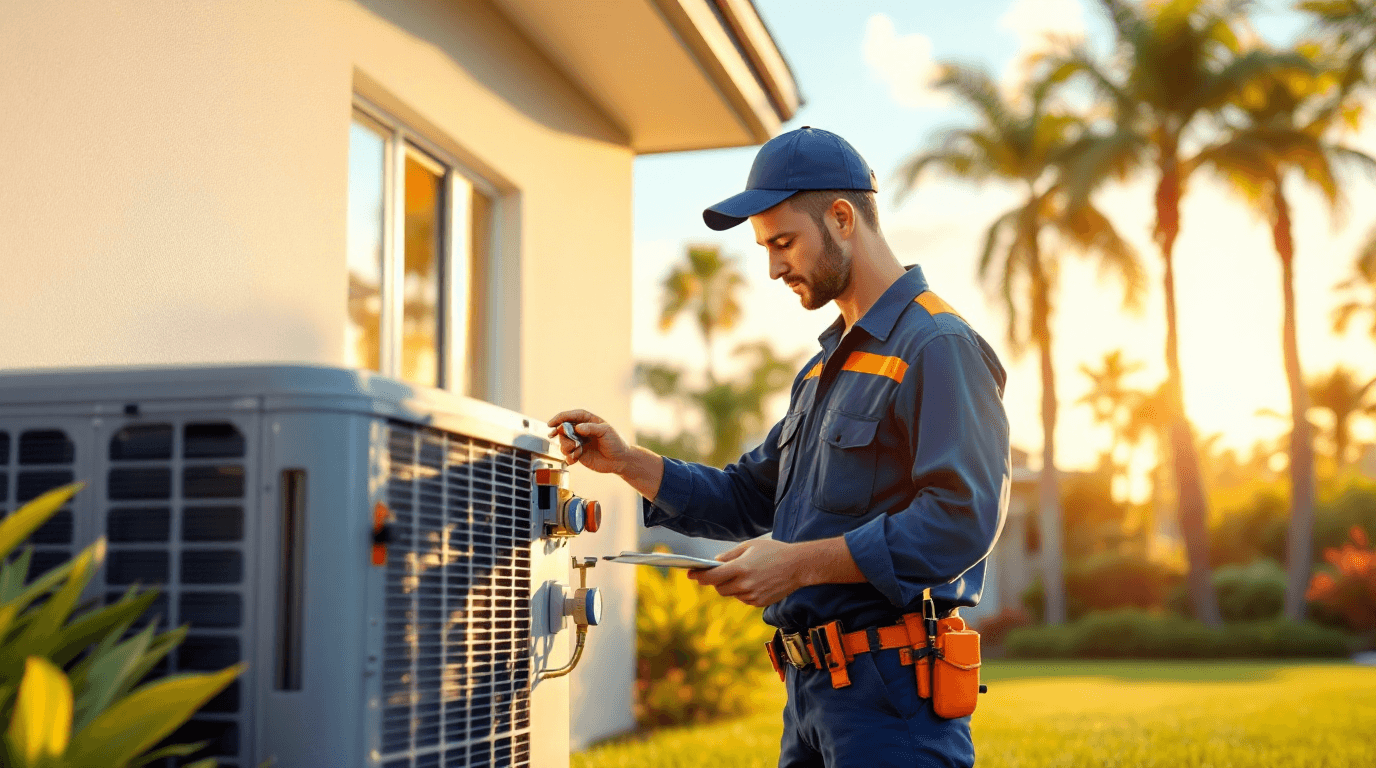
- Inspect AC condenser coils for debris. Clear leaves, dirt, salt spray residue if coastal.
- Check water heater status. If over 10 years old, this is the month to plan replacement before summer.
- Inspect exterior caulk around doors, windows. Salt air in January degrades caulk; this is visible.
- Check roof condition after any January storms. Look for missing shingles, lifted edges. Not a climb-on task-binoculars from ground level.
- Pressure wash gutters and downspouts. Gutters full of leaves and salt spray reduce water flow, increasing roof rot risk.
Cost if hiring: Filter replacement $0-50, AC inspection $100-150, pressure washing gutters $150-300
FEBRUARY: Spring AC Prep Begins
Why now: February is the warmest month (before April). High temps reveal AC weak points.
Tasks:
- Schedule AC service for March-April (don't wait until May when every contractor is booked).
- Inspect ductwork for visible leaks, disconnections, or crushed sections in attic (if accessible). Seal obvious gaps with mastic or duct tape-not the metallic tape, which fails in heat.
- Check condensate drain line. If AC has been running, ensure water is draining outside (check the drain pan if accessible). Slow drains indicate algae/mold growth.
- Test GFCI outlets in kitchen, bathrooms, garage. Press the test button; outlet should cut power. Press reset; power returns. If no reset, replace.
- Inspect for pest entry. Look around foundation, roof vents, attic entry points. Florida's humidity attracts termites, roaches, mosquitoes. Seal obvious gaps.
Cost if hiring: AC service $150-250, ductwork sealing $200-500, pest sealing $300-800
MARCH: Pre-Hurricane Season (First Half)
Why now: Hurricane season prep starts officially June 1, but March-April is when you can get contractors' attention before everyone panics.
Tasks:
- Schedule roof inspection (if not done in January). Look for worn shingles, lifted flashing, metal corrosion. A full roof replacement is $10K+; preventive maintenance is $200-500.
- Trim trees. Cut back branches hanging over roof, near power lines. Storm damage claims spike when trees fail. Remove any dead branches. Cost: $300-1,000 per tree depending on size.
- Clean AC condenser coils professionally if not DIY-accessible. Mineral buildup from Florida's hard water reduces efficiency 10-15%.
- Test sump pump (if you have one-especially important in Miami-Dade, Broward). Fill the basin with water; pump should activate and drain.
- Check exterior paint and wood rot. Salt air accelerates wood rot, especially on eaves, fascia, deck railings. Sand and seal areas showing wear.
- Inspect irrigation system. Spring rains mean you'll be watering less, but check for broken sprinkler heads or leaking valves.
Cost if hiring: Roof inspection $100-200, tree trimming $400-1,500, AC coil cleaning $250-400, wood rot sealing $200-600
APRIL: Full Hurricane Prep Begins
Why now: May-June is peak contractor booking. April is your last month of reasonable availability and pricing.
Tasks:
- Complete any pending roof repairs. If March inspection found issues, fix now. Roofers book solid June-August.
- Install or test storm shutters. If you have hurricane shutters, test the mechanism. If not, measure windows for estimates.
- Check generator. If you have a backup generator, run it under load for 30 minutes. Check fuel, oil, battery. Test automatic transfer switch if applicable.
- Inspect water heater for corrosion. Tanks 8+ years old in Florida are approaching failure risk. Check the drain valve for mineral sediment.
- Pressure wash exterior. Deck, driveway, house siding. Salt spray accumulation happens fast in Florida. Cleaning prolongs material life.
- Check pool pump/filter if applicable. Summer load is coming. Ensure pump primes and filter pressure is normal.
- Inspect attic venting. Adequate ventilation prevents heat buildup, which degrades roofing and insulation. Vents should have clear airflow, not be blocked by insulation.
Cost if hiring: Roof repair $500-2,000, storm shutters $2,000-5,000, generator service $150-250, pressure washing $300-600
MAY: Hurricane Season Preparation Final Phase
Why now: June 1 officially starts hurricane season. Contractors get slammed. Do final prep now.
Tasks:
- Stock hurricane supplies: Bottled water (1 gallon per person per day, 2-week supply), non-perishable food, flashlights, batteries, first aid, medications, important documents in waterproof container, cash (ATMs go offline post-storm).
- Secure outdoor furniture, trash cans, propane grills. Unsecured items become projectiles in high winds.
- Test pool backup pump (if applicable). Heavy rain can overwhelm a pool during hurricanes; backup pumps prevent overflow.
- Final AC check: Filters replaced, condenser coils cleaned, refrigerant pressure verified. You need AC running immediately post-storm to handle heat/humidity.
- Verify homeowners insurance. Call insurer, confirm coverage limits. Post-storm is too late. Take photos of valuables (jewelry, art) for insurance documentation.
- Establish post-storm communication plan. If family is separated, agree on meeting points and out-of-state contact (family/friend).
- Charge all devices and backup batteries. Power outages last 3-7 days post-major hurricane; you need communication capability.
Cost if hiring: This is prep, mostly DIY. Supplies $100-300, insurance verification $0
JUNE-AUGUST: Hurricane Season (Active Monitoring)
Why now: Active season. Storms can develop in 48 hours.
Monthly tasks (recurring):
- Check weather forecast weekly. Tropical season develops systems fast. Sign up for local county emergency management alerts (text/email).
- Verify sump pump operation after heavy rain (May-August has highest rainfall).
- AC filter check monthly if running heavily. Clogged filters cause compressor strain and burnout risk in peak load.
- Verify window/door seals after heavy rain. Water intrusion means seals are failing. Reseal as needed.
- Inspect for mold. Florida humidity + storm rains = mold risk. Check bathrooms, under sinks, basement corners.
- Check generator fuel level monthly. If power outages occur, you need fuel ready. Stabilize fuel (Sta-Bil treatment) to prevent degradation.
June-specific:
- Stock up on supplies before peak season. Mid-July, gas, plywood, generators are scarce.
July-specific:
- Nothing new-mostly monitoring.
August-specific:
- Final AC seasonal maintenance. August is peak cooling demand. Service calls take 3+ weeks. If AC feels weak, call now, not in an emergency.
Cost if hiring: Monthly AC filter $0-30, mold inspection if suspicious $300-500
SEPTEMBER: Post-Storm Recovery (If Applicable)
Why now: Peak of hurricane season. If a storm hit in August, September is cleanup and restoration.
Tasks (post-major storm):
- Document damage with photos/video before cleanup. Insurance needs this for claims.
- File insurance claim within 14 days of storm.
- Tarp any roof holes to prevent water damage. This is emergency mitigation, covered by insurance.
- Remove downed tree limbs from roof/gutters.
- Check HVAC system for storm damage. High winds damage external AC units.
- Inspect foundation for cracks or standing water. Storm surge or heavy rain can expose foundation damage.
- Get AC, roof, plumbing, electrical inspections if there's any visible damage.
If no storm: Just monitor conditions, run weekly weather checks.
Cost if hiring (post-storm): Varies widely depending on damage; tarp $150-400, emergency services $500-3,000+
OCTOBER: Post-Season Equipment Inspection
Why now: Season calms down. Contractors have availability. Time to address any storm damage before November.
Tasks:
- Repair any storm damage found in September inspections.
- Schedule fall HVAC maintenance. AC starts reducing load in November. Pre-winter inspection catches issues before heating season.
- Inspect water heater again. If it's 8+ years old and survived hurricane season, replacement might be coming soon. Plan ahead.
- Pressure wash gutters again. Three months of fall leaves and debris accumulate.
- Inspect deck/patio for rot or structural damage. Wood deteriorates fast in Florida; winter inspection catches issues.
- Check exterior siding for cracks, damage. Storm debris can impact siding; seal any cracks to prevent water intrusion.
- Test all plumbing fixtures for slow drains or leaks. Hard water buildup increases in October.
Cost if hiring: HVAC maintenance $150-250, pressure washing $200-400, wood sealing $300-800
NOVEMBER: AC Winterization (Semi-Cooling)
Why now: AC demand drops. Heating season (minimal in Florida) technically starts, but cooling is still common.
Tasks:
- Replace AC filters before Thanksgiving (holiday guests increase HVAC load).
- Clean AC condenser coils one more time before winter. Leaves, dust, salt spray accumulated.
- Inspect attic insulation. Make sure it's not compressed or damaged. Adequate insulation keeps heat out in summer (critical), warmth in on rare cold nights.
- Winterize exterior faucets and irrigation. Though Florida rarely freezes, rare cold snaps can freeze water in exposed faucets. Shut off water to exterior taps, drain lines.
- Inspect furnace if you have one (most Florida homes don't, but coastal/northern Florida might). If you have a heat pump, test heating function.
- Check crawl space or basement for standing water. November is drier than summer, but poor drainage can still cause issues.
- Chimney inspection if applicable. Even though you rarely use it, chimney birds and blockages accumulate.
Cost if hiring: AC filter $0-50, attic insulation assessment $150-300, irrigation winterization $100-200
DECEMBER: Final Year Check & Holiday Prep
Why now: Final month of year. Time to plan 2027, address overlooked items, winterize for holiday guests.
Tasks:
- AC system final check. Test both cooling and heating. December is the one month Floridians might use heating (though rarely). Make sure it works.
- Furnace filter change (if applicable).
- Inspect roof condition one final time. Look for loose shingles, missing flashing, visible damage from year's storms.
- Check sump pump one more time before any potential winter rain.
- Seal any exterior gaps before end of year. Gaps let in pests and insects during winter months.
- Verify homeowners insurance is current. Renewal dates vary; December is a good month to confirm no lapses.
- Review 2027 maintenance plan. Did anything come due this year that needs addressing next year? Water heater replacement? Roof repair? Plan it.
- Take photos of the home's condition (exterior, roof from ground, interior condition). Useful for insurance claims, home sales, future documentation.
Cost if hiring: AC system check $150-250, roof inspection $100-200, pest sealing $200-500
Annual Summary: Budget Expectations
Routine maintenance (DIY or basic contractor): $1,000-2,000 annually
- Filters, basic inspections, cleaning
Preventive services (contractor-required): $2,000-4,000 annually
- AC service, roof inspection, pressure washing, tree trimming, pest prevention
Emergency repairs (storm-related or unexpected): $3,000-10,000+ annually
- Highly variable depending on storm activity, age of systems, deferred maintenance
Budget $3,000-6,000 per year for Florida home maintenance. This prevents larger emergencies.
HALOFIX helps you stay on schedule. Connect with credential-reviewed Heroes in your area for AC service, roofing, electrical, plumbing, and appliance repairs. Stick to this calendar, and you'll avoid the panic of emergencies during hurricane season.